
I’m that person that takes 2 hours to do the food shopping because I will literally compare every single food label before choosing a tomato sauce.
Luckily you don’t need to be a scientist to get the facts out of a food label and make a solid and confident decision.
Here’s the four things I look for:
1. Sugar per 100g
Since sugar is the number one diet offender in my view, I want to know what percentage of the food or product I’m buying is sugar and aim for 5g per 100 or less (i.e. 5%).
Pretty please don’t think that I’m saying any food with 5% sugar or less is fine to eat. Not true.
For example say you’re looking at buying a flavoured drink that contains water, orange flavour and just 5% sugar – that is still 5% sugar that you don’t need because if you took the water out – you’d literally just be eating sugar. See what I mean?
Percentage is a great way to think about sugar – it makes it easy to visualise how much sugar is in the food and when we see something (even if it is just in our heads) it is harder to ignore it.
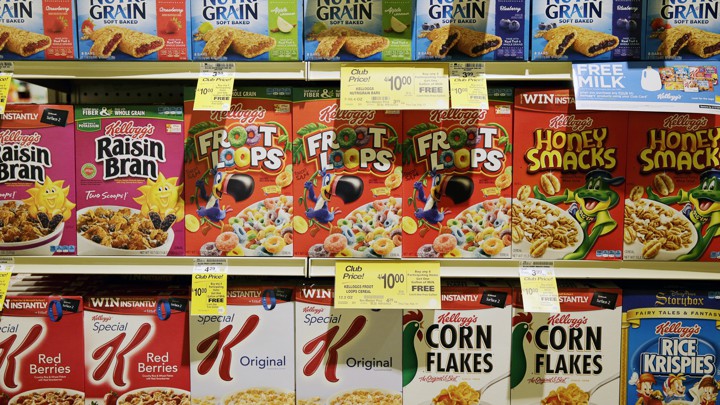
Take cereal for example. Some ‘healthy’ mueslis are up to 30g per 100g sugar. So if you took everything else out of the muesli you would be left with a 1/3 of the box of plain sugar. If it helps, get a box and draw a line with a black marker to mark a third – thats a lot of sugar!!
2. Sugar per serve
I like fudge. There I said it.
It’s a (not-so) guilty pleasure of mine because I know it is largely just sugar and butter deliciously mixed together with the most delightful texture – but I just love it.
So if I was to read the food label on a box of fudge, it should really put me off eating it. However – I like fudge. So I’m going to eat it sometimes. In this case I like to do as the French do – have a tiny bit and savour it. (If you haven’t read French Women Don’t Get Fat it’s a fabulous book.)
So that’s one way to look at serving size. The other important thing about serving size is that to make a food or product appear healthier often the suggested serving size the company chooses is fit for a mouse on a diet. Don’t be fooled by a food label that states only 1g sugar per serve when the ‘serve’ they speak of is actually 1/8th of what you’re likely to eat in one sitting. Unfortunately you’ll need to multiply that 1g of sugar by 8 and then you have about 2 teaspoons!
3. Fats
But not in the way you might think. The second biggest offender in our diets is industrial seed oils, often misleadingly named ‘vegetable oils’ and commonly referred to as the ‘healthy’ or polyunsaturated fats. These unstable and toxic fats are unnaturally produced and seriously detrimental to health. They are high in omega 6 fatty acids and tip our omega 3:6 ratio way out of whack as far as nature’s concerned. Omega 6 fatty acids are inflammatory and fuel chronic diseases like obesity, metabolic disease and even cancer.
So what about saturated fat? Well since humans have been consuming this for thousands of years unlike the vegetable oils manufactured in the last century, I’m not worried about this. In fact what I mean when I look at the fat content is that I want to see that most of the fat is NOT polyunsaturated and is either saturated or monounsaturated. I’ll also check the ingredients list to make sure I recognise the sources of fats, trying to avoid those ‘vegetable’ or seed oils.
4. Ingredients list
Here I’m looking for two things – an ingredients list that isn’t too long and with names that I recognise – i.e. they’re real food ingredients, not letters, numbers, additives, preservatives and ‘surely made up’ words.
Take potato crisps as an example. Take plain chips (or crisps depending on where you’re from), and you’ll find the ingredient list says potatoes, oil, salt. That’s it.
Compare that to a sour cream and onion flavoured bag of chips and you’ll find up to 15 different ingredients, including powders, colours, flavours, and guaranteed a lot more sugar.
Obviously chips aren’t the best thing to eat regularly, but plain chips are a better option. That doesn’t mean I’m never eating the sour cream and onion, but if I do, I’m doing it know that I’m choosing more junk and for whatever reason I’m ok with that!
—–
Do you struggle with choosing healthy snacks?
Yep, my clients did too.
That’s why I created my Ultimate Snack Guide – and you download it right now – for free!
Ultimate Snack Guide FREE Download

Kelly Moriarty is an online health & nutrition coach and founder of The Green Body Plan.
After 5 years as a veterinarian Kelly was unhealthy, stressed out and generally dissatisfied.
She now helps professional women make the same changes she did to beat burn out, lose weight, recover their energy and take back control of their health naturally.
 kellyannmoriarty.com